AI-Enabled Engineering Is Changing the Rules for Talent, Skills and Workforce Readiness (Episode One)
As AI moves from experimentation into daily enterprise workflows, companies are confronting a harder question than whether to adopt new tools: how to redesign work around them. The shift is already changing what employers need from technical talent, from task-based coding skills to systems thinking, judgment and the ability to guide AI-enabled platforms. According to the World Economic Forum’s Future of Jobs Report 2025, 59% of workers will need reskilling or upskilling by 2030. For software engineering teams, that means the future may not be about replacing people outright, but rethinking the roles people play as AI accelerates more of the development lifecycle.
So what should companies, educators and workers do when AI does not simply automate tasks, but changes the very definition of technical talent?
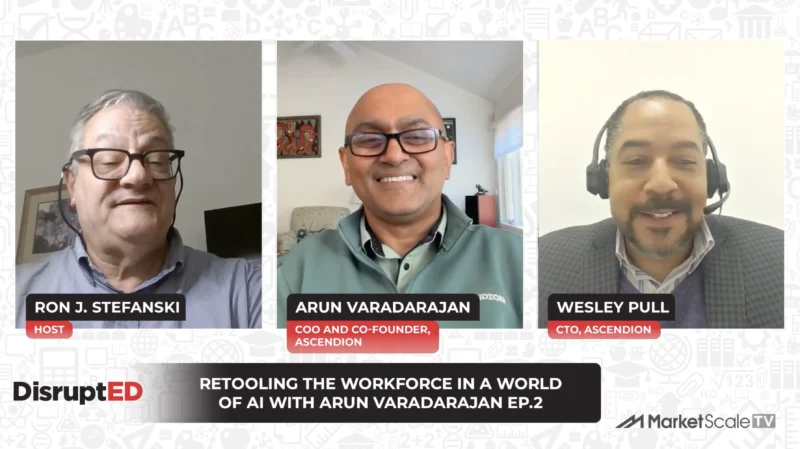
That’s the question at the heart of the latest episode of DisruptED. In the first installment of this special two-part series, host Ron J. Stefanski and Arun Varadarajan, chief commercial officer and co-founder of Ascendion, talk about retooling the workforce for an AI-accelerated economy. Their conversation explores how AI is reshaping software engineering, why speed and predictable outcomes matter in enterprise technology, and why the future of talent may depend less on narrow skills and more on first-principles thinking, systems judgment and human oversight.
Top insights from the talk…
- AI is changing the role of engineers. Varadarajan explains that Ascendion’s platform can generate engineering artifacts such as design documents, roadmaps, requirements, epics and user stories, shifting engineers from creators of every artifact to reviewers, validators and systems thinkers.
- Software engineering needs a systems-level rethink. Drawing a parallel to lean manufacturing, Varadarajan argues that the software development lifecycle has been too disconnected, slow and unpredictable — and that AI can help create a more frictionless engineering process.
- The future of employability is about competencies, not just skills. Rather than declaring computer science “dead,” Varadarajan says workers and students should focus on aptitude, logical reasoning, programming concepts and first principles, because AI-enabled systems will ask different things of talent.