Building the Whole Person Project to Address Chronic Underemployment
The world of workforce has moved the needle to really adapt the system for current needs, but with continued chronic underemployment, a whole-person approach is not currently standard in the system for workforce development. Why should it be?
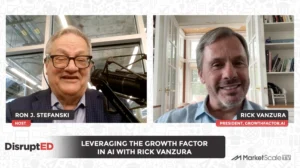
In part 1 of this 2-part episode, DisruptED, host Ron J. Stefanski speaks with off-the-charts GSD indexer Marlena Sessions, Executive Director of NOVAworks, about chronic underemployment, underserved communities, and what they can do for those who are historically excluded using a whole-person approach.
Sessions remarked, “I would have to say that people who haven’t been included…in the great programming, the great things, is usually because…they don’t know about it. They don’t have that social capital; they don’t have those mentors or that network.”
Stefanski and Sessions discuss…
● What NOVAworks is doing to help address underemployment in historically
excluded communities.
● Why workforce development using a whole-person approach matters for
assessments
● Why it’s better to get to know the person you’re serving on a deeper level to
better provide life-supporting and family-supporting jobs
“It’s really finding out and building that trust, becoming a mentor in addition to a career advisor,” said Sessions.
Sessions has over two decades of experience working to change lives. Prior to her role with NOVAworks, Sessions was the Executive Director for San Bernardino County Workforce Development Board, worked in leadership roles for Grant Associates, and led the Workforce Development Council of Seattle-King County as the COO and CEO for seventeen years. She holds her BA in History/Political Science from Whitworth University and her MA in Organizational Leadership from Gonzaga University.
Unemployment is at historically low levels, but the workforce still needs workers. What could discourage potential workers from applying to a particular job or entering a specific industry? It comes down to skills. Not possessing the skills for a particular job or industry is a problem for today’s workforce, but it should not be a deterrent. Upskilling and reskilling are excellent solutions. This skills-based hiring approach needs further investigation to solve for the current chronic underemployment.
In the second part of this DisruptED two-part episode, host Ron J. Stefanski explored this topic through his continued conversation with Marlena Sessions, Executive Director of NOVAworks. “Our labor market is constantly changing, but in the past two years or so, it’s given us an opportunity to get in with employers even more so and say to them, you need great workers, and you need great talent; what are your hiring practices like,” Sessions said.
On this episode of DistruptED, Stefanski and Sessions discuss the following…
● Shifting the paradigm on hiring practices and selecting talent
● How skills could potentially outweigh or shift priorities on the traditional
four-year, higher education model
● The need for increased skilled workers in IT and Cybersecurity
● Creating more inclusive hiring practices
“It’s refreshing for an employer to realize by doing these more inclusive hiring practices, they are doing more inclusive hiring, and finding talent, they might otherwise never consider,” Sessions said.